

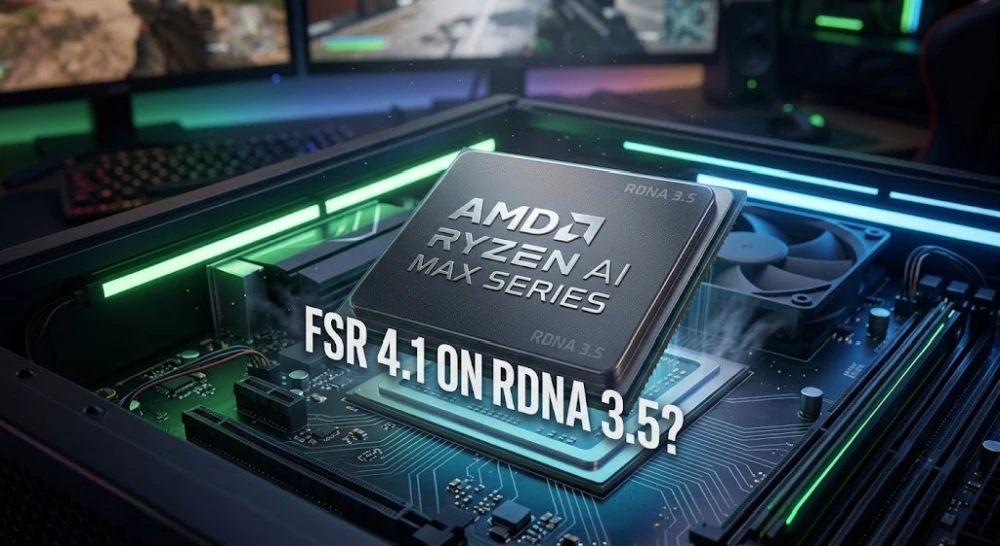
A recent report by Digital Foundry had many AMD handheld and laptop users worried. They suggested that FSR 4.1, the latest iteration of AMD’s FidelityFX Super Resolution upscaling technology, might skip over RDNA 3.5 integrated graphics units (iGPUs). This would affect popular devices like the ASUS ROG Ally X and AMD’s upcoming Strix Halo platform.
However, Frank Azor, AMD’s Chief Architect of Gaming Solutions & Marketing, has refuted these rumors on Twitter. He stated that while he wasn’t present to hear the exact words spoken, “no such decision as being reported and implied here has been made.”
He further added, “We are not ready to speak to any other potential future product plans at this time. We continue to listen to our customers and we hear you.” This isn’t a definitive confirmation that RDNA 3.5 will receive FSR 4.1, but it does strongly negate the previous reporting that it definitely won’t.
This news brings some much-needed hope to owners of recent and upcoming handhelds and gaming laptops featuring RDNA 3.5 graphics. The initial report was alarming, as missing out on FSR 4.1, especially with its rumored AI-driven improvements (using INT8 precision), would have left these devices at a disadvantage compared to competitors like Intel with XeSS and Nvidia with DLSS on its upcoming RTX Spark chips.
The situation highlight the importance of clear communication from companies regarding upcoming features and software support. AMD’s previous messaging about FSR 4.1 focusing on RDNA 3 (RX 7000) and RDNA 2 (RX 6000) desktop cards seems to have led to some confusion and pessimistic assumptions regarding newer iGPU architectures.
For now, AMD users with RDNA 3.5 based hardware can breathe a little easier, though they still await official confirmation on FSR 4.1 support.




































 Omada
Omada